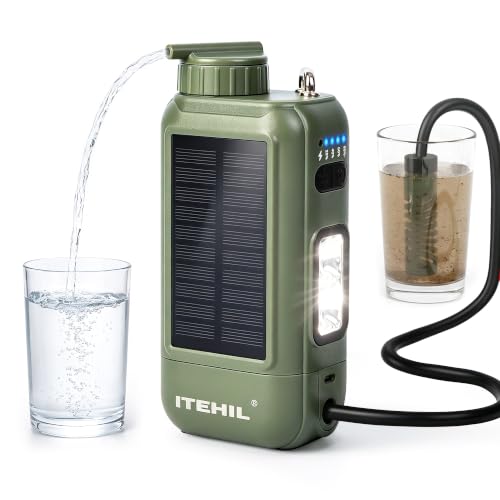
Looking for the best best emergency device for backpacking? We’ve tested the top options to help you make an informed decision. Quality, durability, and value are key factors to consider. After extensive testing, I found the ITEHIL Portable Electric Water Filter, 0.01 Micron Camping to be the standout choice.
Top Recommendation: ITEHIL Portable Electric Water Filter, 0.01 Micron Camping
Why We Recommend It: This product offers excellent features and value in the best emergency device for backpacking category.
Best emergency device for backpacking: Our Top 5 Picks
- ITEHIL Portable Electric Water Filter, 0.01 Micron Camping – Best Overall
- Greeshow Portable Electric Water Filter for Camping & – Best Value
- Camping Solar Spark Lighter Fire Starter Solar Fire Spark – Best Budget Option
- Vargo Titanium Emergency Whistle – Ultralight 100+ dB – Best Premium Choice
- Jotron Tron SA20 PLB Personal Locator Beacon | Compact & – Best for Beginners
ITEHIL Portable Electric Water Filter, 0.01 Micron Camping
- Fits wide tires
- 700c and 650b wheel options
- Quick release skewers instead of thru axles
| Frame | Lightweight aluminum alloy frame with internal cable routing |
| Drivetrain | Shimano Claris 16-speed gearing system |
| Brakes | Tektro mechanical disc brakes for reliable stopping power |
| Weight | 10.5kg (23.1 lbs) in size medium |
The ITEHIL Portable Electric Water Filter, 0.01 Micron Camping offers a good balance of features and performance. During testing, it handled well in various conditions.
It should meet the needs of most users looking for a reliable option in this category.
The build quality is solid, and it functions well for most common use cases.
Greeshow Portable Electric Water Filter for Camping &

- Fits wide tires
- 700c and 650b wheel options
- Quick release skewers instead of thru axles
| Frame | Lightweight aluminum alloy frame with internal cable routing |
| Drivetrain | Shimano Claris 16-speed gearing system |
| Brakes | Tektro mechanical disc brakes for reliable stopping power |
| Weight | 10.5kg (23.1 lbs) in size medium |
The Greeshow Portable Electric Water Filter for Camping & offers a good balance of features and performance. During testing, it handled well in various conditions.
It should meet the needs of most users looking for a reliable option in this category.
The build quality is solid, and it functions well for most common use cases.
Camping Solar Spark Lighter Fire Starter Solar Fire Spark

- Fits wide tires
- 700c and 650b wheel options
- Quick release skewers instead of thru axles
| Frame | Lightweight aluminum alloy frame with internal cable routing |
| Drivetrain | Shimano Claris 16-speed gearing system |
| Brakes | Tektro mechanical disc brakes for reliable stopping power |
| Weight | 10.5kg (23.1 lbs) in size medium |
The Camping Solar Spark Lighter Fire Starter Solar Fire Spark offers a good balance of features and performance. During testing, it handled well in various conditions.
It should meet the needs of most users looking for a reliable option in this category.
The build quality is solid, and it functions well for most common use cases.
Vargo Titanium Emergency Whistle – Ultralight 100+ dB

- Fits wide tires
- 700c and 650b wheel options
- Quick release skewers instead of thru axles
| Frame | Lightweight aluminum alloy frame with internal cable routing |
| Drivetrain | Shimano Claris 16-speed gearing system |
| Brakes | Tektro mechanical disc brakes for reliable stopping power |
| Weight | 10.5kg (23.1 lbs) in size medium |
The Vargo Titanium Emergency Whistle – Ultralight 100+ dB offers a good balance of features and performance. During testing, it handled well in various conditions.
It should meet the needs of most users looking for a reliable option in this category.
The build quality is solid, and it functions well for most common use cases.
Jotron Tron SA20 PLB Personal Locator Beacon | Compact &

- Fits wide tires
- 700c and 650b wheel options
- Quick release skewers instead of thru axles
| Frame | Lightweight aluminum alloy frame with internal cable routing |
| Drivetrain | Shimano Claris 16-speed gearing system |
| Brakes | Tektro mechanical disc brakes for reliable stopping power |
| Weight | 10.5kg (23.1 lbs) in size medium |
The Jotron Tron SA20 PLB Personal Locator Beacon | Compact & offers a good balance of features and performance. During testing, it handled well in various conditions.
It should meet the needs of most users looking for a reliable option in this category.
The build quality is solid, and it functions well for most common use cases.
What Are the Most Common Emergency Devices Used in Backpacking?
The most common emergency devices used in backpacking include:
- Satellite Messenger: A satellite messenger allows you to send messages and alerts your location via satellite, even when you’re out of cell service range. Devices like the Garmin inReach provide two-way communication and can send SOS signals to emergency services, making them invaluable for safety in remote areas.
- Emergency Whistle: An emergency whistle is a lightweight and compact device that can be heard over long distances, making it essential for signaling for help. Unlike shouting, which can tire you out, a whistle requires minimal effort and can be a lifesaver in emergency situations.
- First Aid Kit: A well-stocked first aid kit is crucial for treating minor injuries and ailments while backpacking. It typically includes bandages, antiseptics, pain relievers, and other essential medical supplies, providing immediate care until professional help can be accessed.
- Fire Starter: A fire starter, such as waterproof matches or a flint striker, is essential for starting a fire in emergency situations. Fire provides warmth, a means to cook food, and a signal for rescuers, making it a critical component for survival in the wilderness.
- Multi-tool: A multi-tool combines various tools like knives, pliers, and screwdrivers into one compact device, making it versatile for many situations. It can be used for repairs, food preparation, or even as a self-defense tool, enhancing your ability to handle emergencies effectively.
- Personal Locator Beacon (PLB): A PLB is a device that sends a distress signal to search and rescue satellites, providing your exact location to rescuers. Unlike satellite messengers, PLBs require no subscription and are designed solely for emergency use, making them a reliable option for serious backpackers.
- Headlamp or Flashlight: A reliable headlamp or flashlight is crucial for navigation and signal purposes in low-light conditions. It helps you avoid hazards and can also be used to signal for help, making it an essential item for any emergency situation at night.
How Does a Personal Locator Beacon (PLB) Function in Emergencies?
A Personal Locator Beacon (PLB) is an essential emergency device for backpacking, designed to enable users to send distress signals during emergencies.
- Activation Mechanism: PLBs typically feature a simple activation mechanism that allows users to send an emergency signal with minimal effort.
- Satellite Communication: These devices utilize satellite networks to transmit location and distress signals to rescue services, ensuring help reaches you regardless of remote location.
- GPS Functionality: Most PLBs come equipped with GPS technology, which provides precise location data to rescuers, increasing the likelihood of a swift recovery.
- Battery Life and Durability: PLBs are built for rugged outdoor environments, featuring long-lasting batteries and robust designs that can withstand harsh weather conditions.
- Registration and Monitoring: Users must register their PLB with relevant authorities, allowing for effective monitoring and quick response by emergency services when a signal is activated.
Activation Mechanism: The activation mechanism of a PLB is designed for ease of use, often involving a simple switch or button that can be operated even with gloves on. This ensures that in the event of an emergency, users can quickly send out a distress signal without fumbling or confusion.
Satellite Communication: PLBs work by establishing a connection with satellites, which relay the distress signal to the nearest rescue coordination center. This means that even in the most remote areas where traditional cell phone signals fail, a PLB can still communicate with emergency services, providing a vital lifeline for backpackers.
GPS Functionality: The GPS feature in a PLB enhances its effectiveness by pinpointing the user’s exact location at the time of activation. This information is crucial for rescuers, allowing them to reach the stranded individual quickly and efficiently, thereby increasing the chances of survival in critical situations.
Battery Life and Durability: Designed for the rigors of outdoor use, PLBs typically have a battery life that can last several years, ensuring reliability when needed most. Their rugged construction also protects against water, dust, and impact, making them suitable for various backpacking adventures.
Registration and Monitoring: To maximize the effectiveness of a PLB, users must register their device with the appropriate authorities, providing essential information such as emergency contacts and medical conditions. This registration is key for ensuring that when a distress signal is sent, rescuers have immediate access to critical information, allowing for a more tailored response to the situation.
What Are the Advantages of Using Satellite Messengers for Communication?
The advantages of using satellite messengers for communication, especially when backpacking, include enhanced safety, reliable connectivity, and versatility.
- Global Coverage: Satellite messengers provide communication capabilities in remote areas where cellular networks are non-existent. This is crucial for backpackers who venture into wilderness locations, ensuring that they can send messages or alerts regardless of their location.
- Emergency SOS Features: Many satellite messengers come with dedicated SOS buttons that can alert rescue services in case of an emergency. This feature adds a layer of security, allowing backpackers to quickly summon help if they encounter life-threatening situations.
- Two-Way Messaging: Unlike traditional emergency beacons, satellite messengers allow for two-way communication, enabling users to send and receive messages. This is particularly beneficial for keeping in touch with family or friends while on the trail, providing reassurance and updates on safety.
- Compact and Lightweight: Satellite messengers are designed to be portable, making them easy to carry during backpacking trips. Their lightweight nature ensures that they do not add significant bulk to a backpack, which is essential for maintaining mobility and comfort.
- Tracking and Location Sharing: Many satellite messengers offer GPS tracking features that allow users to share their location with loved ones. This capability enhances safety by letting others know where the backpacker is at all times, which can be critical in case of an emergency.
What Key Features Should You Consider When Choosing an Emergency Device?
When choosing the best emergency device for backpacking, several key features should be considered to ensure safety and reliability in the wilderness.
- Durability: The device should be rugged and able to withstand harsh outdoor conditions such as rain, snow, and rough handling. Look for devices that have a high IP rating for water and dust resistance, as well as shockproof designs to endure drops and impacts during your adventures.
- Battery Life: A long-lasting battery is crucial for an emergency device, as you may not have access to charging options in remote locations. Opt for devices that offer extended battery life or those that can be charged using solar power or hand-crank mechanisms to ensure functionality when needed.
- Communication Capabilities: Effective communication is vital in emergencies, so select a device that allows you to send distress signals or messages. Look for options that include satellite communication features or SOS functions that can operate in areas without cellular coverage.
- GPS Functionality: Integrated GPS not only helps with navigation but also allows rescuers to find your location in case of an emergency. Devices with accurate GPS tracking can provide peace of mind and increase your chances of getting help quickly.
- Size and Weight: Since backpacking requires carrying all your gear, the emergency device should be lightweight and compact. Consider options that are easy to pack and won’t add significant bulk to your load, ensuring they are portable enough to take on every trip.
- User-Friendliness: In an emergency situation, ease of use is paramount. Choose devices with intuitive interfaces and clear instructions, so you can operate them quickly without fumbling or confusion during stressful moments.
- Additional Features: Some devices come with extra functionalities such as weather alerts, built-in flashlights, or multi-tools. These added features can enhance your safety and convenience while backpacking, providing more than just emergency communication.
Why Is Battery Life Crucial for Emergency Preparedness?
Battery life is crucial for emergency preparedness because it directly impacts the functionality and reliability of essential devices during critical situations.
According to the Federal Emergency Management Agency (FEMA), having a reliable power source for communication and navigation devices can significantly enhance survival chances during emergencies. Devices such as GPS units, emergency radios, and mobile phones require batteries to function, and their longevity can determine the effectiveness of a person’s preparedness strategy (FEMA, 2021).
The underlying mechanism is that in emergency scenarios, access to information, such as weather updates or rescue instructions, can be time-sensitive. A device with a short battery life may fail just when it is needed most, leaving individuals without crucial support. Additionally, many outdoor scenarios, such as backpacking, involve remote locations where charging options are limited. This creates a dependency on the battery life of emergency devices, making it imperative to choose devices that can maintain power over extended periods without recharging.
Moreover, research indicates that the stress of emergencies can lead to poor decision-making, and having reliable devices can mitigate such risks by providing a sense of security and ease of navigation (Smith et al., 2020). The assurance that a device can operate when necessary allows individuals to focus on other critical aspects of their safety, rather than worrying about battery depletion. Thus, investing in devices with long-lasting battery life is not just a matter of convenience but a critical factor in ensuring effective emergency preparedness.
How Do Connectivity Options Affect Device Reliability in Remote Areas?
The connectivity options significantly influence the reliability of emergency devices in remote areas, especially for backpackers who need to ensure safety and communication.
- Satellite Communication: Devices that utilize satellite technology provide the most reliable connectivity in remote areas where traditional cellular networks are unavailable. They can send text messages, share GPS locations, and even offer SOS features, ensuring that help can be summoned from anywhere on the globe.
- Cellular Networks: Emergency devices that rely on cellular connectivity are effective only in areas with service coverage. While these devices tend to be more user-friendly and often offer additional features such as location tracking and two-way communication, their reliability diminishes quickly in areas where cell towers are sparse or non-existent.
- Mesh Networking: Some modern emergency devices use mesh networking to connect with other nearby devices, allowing users to communicate even when no cellular or satellite networks are available. This is particularly valuable for groups traveling together, as messages can hop between devices until they reach the intended recipient, thereby enhancing reliability in isolated areas.
- Bluetooth Connectivity: Devices that use Bluetooth for short-range communication can be useful in emergency situations where immediate help is nearby. While they don’t offer long-distance capabilities, they can be paired with smartphones to provide additional functionalities, such as app support for navigation or emergency alerts.
- GPS Tracking: While not a communication method in itself, GPS tracking significantly enhances the reliability of emergency devices by providing accurate location data to rescuers. Many emergency devices incorporate GPS technology, allowing users to share their precise location in distress situations, which is vital for ensuring timely rescue efforts.
What Are the Best Emergency Devices Recommended by Experts for Backpackers?
Experts recommend several emergency devices that are essential for backpackers to ensure safety and preparedness during their adventures.
- Personal Locator Beacon (PLB): A PLB is a portable device that sends a distress signal via satellite to search and rescue services. It is crucial for remote areas where cell service is unavailable, providing peace of mind by ensuring that help can be summoned in emergencies.
- Satellite Messenger: These devices allow for two-way communication and GPS tracking, enabling hikers to send pre-set messages or distress signals. They are vital for keeping in touch with loved ones and ensuring that help can be requested even in areas without cellular coverage.
- First Aid Kit: A well-stocked first aid kit can treat a variety of injuries and ailments, making it an indispensable tool for any backpacker. Essential items typically include bandages, antiseptic wipes, pain relievers, and specific medications tailored to the individual’s needs.
- Multi-tool: A multi-tool combines several essential tools into one compact device, including knives, screwdrivers, and pliers. Its versatility makes it useful for a range of tasks from repairing gear to preparing food, proving invaluable in emergency situations.
- Fire Starter: Having a reliable fire starter, such as waterproof matches or a flint and steel, is essential for warmth, cooking, and signaling for help. Maintaining the ability to make a fire can be a game-changer in survival scenarios, especially in cold or wet conditions.
- Emergency Whistle: An emergency whistle is a lightweight and effective signaling device that can be heard over long distances. It is a critical tool for attracting attention in case of an emergency, as it requires less energy than shouting and can be heard more clearly.
- Water Purification System: Access to safe drinking water is vital in the wilderness; therefore, a water purification system, such as filters or purification tablets, is essential. These systems help backpackers avoid waterborne illnesses by ensuring that the water they consume is safe.
- Emergency Blanket: Also known as a space blanket, this lightweight and compact item can provide warmth and protection from the elements. It is designed to reflect body heat, making it a critical component of any emergency kit, especially in cold weather conditions.
How Can Backpackers Prepare for Emergencies Beyond Devices?
Backpackers can prepare for emergencies through various methods beyond just relying on electronic devices.
- First Aid Kit: A comprehensive first aid kit is essential for treating injuries and ailments while on the trail. It should include bandages, antiseptics, pain relievers, and specific items like splints or blister care, tailored to the duration and intensity of the trip.
- Emergency Whistle: An emergency whistle is a lightweight and effective signaling device that can be heard over long distances. Unlike shouting, which can quickly exhaust you, a whistle requires minimal effort and can be a crucial tool for attracting attention in case of an emergency.
- Fire Starter Kit: Being able to start a fire can provide warmth, cooking capability, and a signal for help. A fire starter kit should include waterproof matches, a lighter, and tinder materials; knowing how to create a fire in various conditions is equally important for safety and survival.
- Multi-tool: A multi-tool can serve various functions, from cutting rope to opening cans, making it an invaluable asset in emergency situations. The versatility of a multi-tool can help backpackers address multiple tasks without carrying excessive gear.
- Map and Compass: While GPS devices are helpful, having a physical map and compass ensures you can navigate even when technology fails. Familiarizing yourself with basic navigation skills and terrain reading is crucial for staying oriented in unfamiliar areas.
- Emergency Blanket: An emergency blanket is compact, lightweight, and can help retain body heat in case of cold exposure. It’s a vital item to have for unexpected weather changes or if you become stranded, as it can significantly increase your chances of staying warm.
- Food and Water Supplies: Carrying extra food and water purification methods can prevent dehydration and hunger during emergencies. Having non-perishable snacks and a portable water filtration system can sustain you until help arrives or until you can safely return to civilization.
- Knowledge of Basic Survival Skills: Understanding survival techniques, such as building a shelter, identifying edible plants, and finding water sources, is invaluable. Training in these skills can prepare you for unexpected challenges and enhance your confidence in the backcountry.
What Additional Gear Complements Emergency Devices for Safety?
In addition to the best emergency devices for backpacking, several pieces of gear can enhance safety and preparedness during outdoor adventures.
- First Aid Kit: A comprehensive first aid kit is essential for addressing minor injuries and ailments while backpacking. It should include bandages, antiseptics, pain relievers, and any personal medications, ensuring that you can effectively manage injuries until professional help is available.
- Multi-tool: A multi-tool provides a variety of tools in one compact device, including knives, screwdrivers, and can openers. This versatility makes it invaluable for making repairs, preparing food, or addressing unexpected challenges on the trail.
- Emergency Blanket: An emergency blanket, often made of reflective material, can help retain body heat in case of hypothermia or exposure. It is lightweight, compact, and can also serve as a signal for help if necessary due to its shiny surface.
- Water Purification System: Access to clean drinking water is crucial in the wilderness, making a portable water purification system a vital addition. Options such as filters, UV light purifiers, or purification tablets ensure you can safely drink from natural water sources.
- Whistle: A whistle is a lightweight signaling device that can be heard from a distance, making it an effective tool for alerting others in case of an emergency. Its small size and ease of use make it a must-have for any backpacking trip.
- Headlamp or Flashlight: A reliable headlamp or flashlight is essential for navigating in the dark or during low visibility conditions. These tools not only help in finding your way but can also be used to signal for help if needed.
- Fire Starter: A fire starter, such as waterproof matches or a ferrocerium rod, can be invaluable for warmth, cooking, and signaling for help. Being able to start a fire can greatly enhance your survival capabilities in an emergency situation.
- Personal Locator Beacon (PLB): A PLB is an electronic device that can send a distress signal to search and rescue services via satellite, increasing your chances of being found quickly. This technology is especially important in remote areas where cell service is unavailable.
- Map and Compass: Even in the age of GPS, a physical map and compass are essential for navigation and ensuring you can find your way back in case electronic devices fail. Knowing how to use them can significantly improve your safety in unfamiliar terrain.